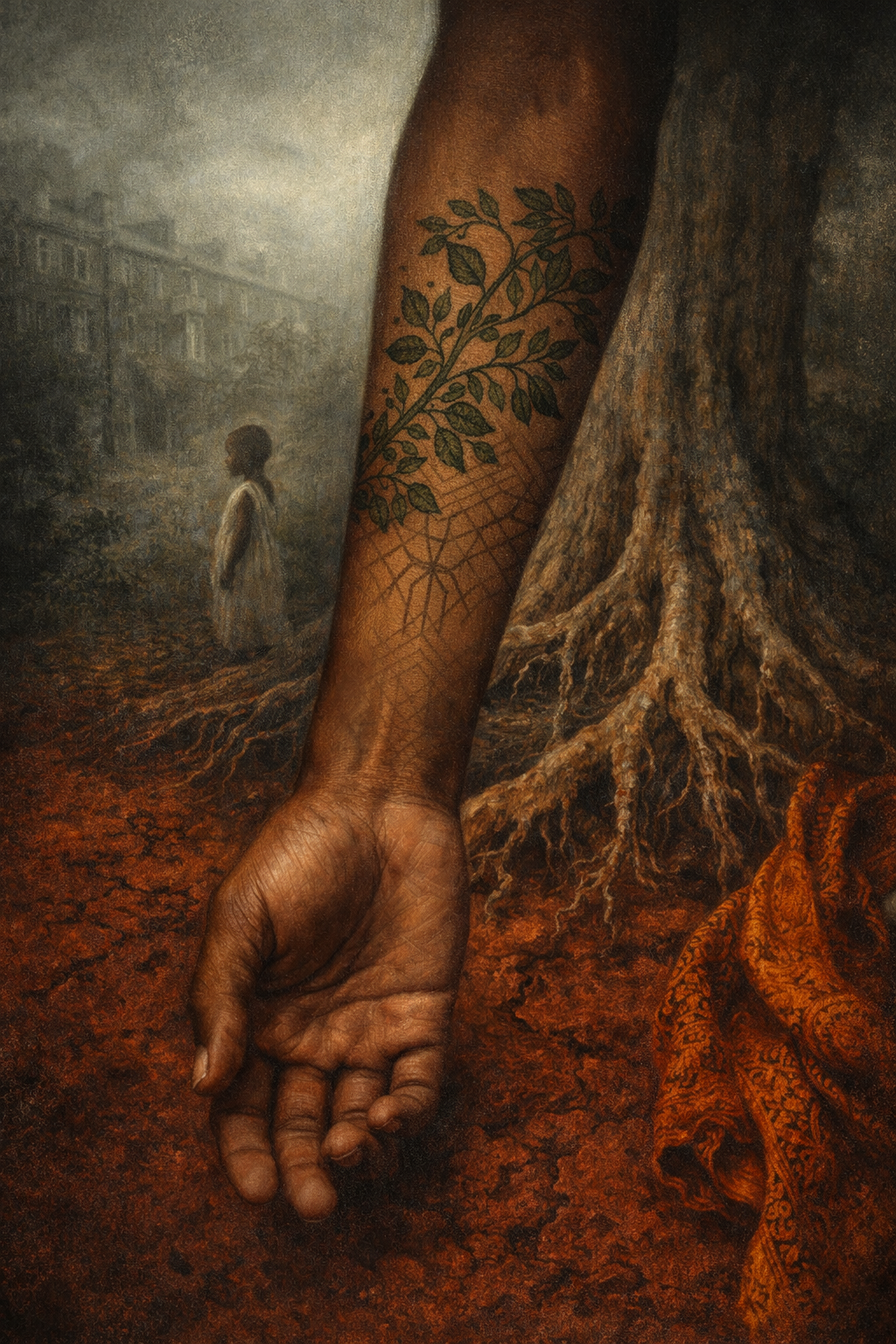
A cycle of red earth, cold archives, and recognition.
The Patterns of Loss
In 1901 colonial Nigeria, Cecily Ashford-Crane watches a world her husband refuses to map. In modern London, Eni Webb archives a past that refuses to stay buried.
When the clinical precision of the present meets the spiritual debts of the past, the inventory of a life begins to reveal a haunting truth: some children do not leave. They merely wait for the door to open again.
“Uncertainty, if indulged, becomes disorder.”
— Edmund Ashford-CraneThe Archive of Souls
Eni Webb
A meticulous conservator who treats life like an inventory. Her development is a journey from “Inventory” to “Recognition.”
Cecily Ashford-Crane
The 1901 “Witness.” She chose to see the red earth for what it was, even as her world demanded colonial order.
Sister Yetunde
The bridge. A Senior Sister who has spent twenty years tracking a pattern through medical charts and silent recognition.
The Physical Archive
The Red Earth
Soil sample, 1901.
The Orange Cloth
Textile fragment.
The Archive Tattoo
Negotiated marking.
The Complete Narrative
“Not restored. Not innocent. After, and living.”
Digital Archival Formats Available Now